Table of Contents
There’s nothing quite like the sizzle of breakfast sausage hitting a hot grill as the morning sun paints the mountainsides, or the smoky aroma of dinner wafting through your campsite under a sky full of stars. For RV travelers, that portable grill isn’t just an appliance; it’s the heart of the journey, transforming roadside stops into memorable feasts and turning campground strangers into friends over shared meals. It’s the difference between reheating canned soup and truly living your adventure, one perfectly charred burger or veggie skewer at a time. But let’s be honest: hauling the wrong grill can turn that dream into a logistical nightmare, eating up precious storage space or failing spectacularly when the wind kicks up in the desert.
Choosing the ideal portable grill for your rig demands more than just grabbing the smallest model on the shelf. RV life throws unique challenges at your cooking setup: cramped storage compartments, unpredictable weather, varying fuel availability off-grid, and the constant need for quick setup and takedown as you chase the next destination. A grill that works perfectly in your backyard might be a colossal headache on the road, whether it’s too heavy to maneuver, too flimsy for bumpy roads, or impossible to clean with limited water. This guide cuts through the noise, focusing squarely on the features and considerations that actually matter when your kitchen has wheels and your dining room is wherever you park. Forget one-size-fits-all advice; let’s build a framework for finding your perfect mobile cooking companion.
Top 10 Portable Grills for RV Travel
Detailed Product Reviews
1. Flame King - YSNHT500 RV Or Trailer Mounted BBQ - Motorhome Gas Grill - 214 Sq Inch Cooking Surface - Adjustable Flame Controller, Black

Overview:
This dedicated RV-mounted gas grill offers integrated outdoor cooking for motorhomes and trailers. Featuring a 221 sq. in. cooking surface, 12,000 BTU burner, and adjustable flame control, it mounts securely via included brackets while doubling as a free-standing unit with its detachable legs.
What Makes It Stand Out:
Its true specialization for RV/trailer mounting sets it apart. The secure locking retainer pins and dual-lid design ensure stability on the road, while the versatility to convert to a free-standing grill (using the hanging rack as legs) enhances usability for tailgating or camping beyond vehicle attachment.
Value for Money:
Priced competitively for its niche, it eliminates the need for separate portable grills when traveling. Compatibility with standard RV propane systems (via specific hoses) adds long-term convenience, though the requirement for proprietary hoses may incur minor extra costs versus universal connections.
Strengths and Weaknesses:
Strengths: Seamless RV integration; robust 12,000 BTU output; secure storage features; versatile mounting/free-standing use. Weaknesses: Requires specific hoses (sold separately); slightly smaller cooking area than some portables; installation may need DIY effort for non-prepped vehicles.
Bottom Line:
An indispensable, well-engineered solution for RV enthusiasts seeking reliable built-in grilling. Its specialization justifies the price for mobile living, though casual campers might prefer simpler portable alternatives.
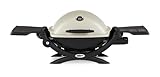
2. Weber Q1200 Liquid Propane Portable Gas Grill, Titanium – 1‑Burner Travel and Camping Grill with Cast‑Iron Grates & Electronic Ignition (8,500 BTU Burner)
Overview:
Weber’s premium portable grill delivers restaurant-quality results in a compact frame. Its 8,500 BTU burner, porcelain-enameled cast-iron grates, and electronic ignition cater to travelers seeking performance without sacrificing convenience for camping or tailgating.
What Makes It Stand Out:
The cast-iron grates provide exceptional heat retention and sear marks unmatched by standard porcelain grids. Paired with the infinite-control burner for precise temperature management and a high-dome lid accommodating whole chickens, it bridges the gap between portability and serious grilling capability.
Value for Money:
Higher priced than budget portables, but justified by Weber’s durability and superior cooking performance. The cast-aluminum construction ensures longevity, while the integrated thermometer and pull-out grease pan enhance usability—making it a cost-effective investment for frequent users.
Strengths and Weaknesses:
Strengths: Outstanding heat control; durable cast-aluminum build; excellent searing from cast-iron grates; reliable ignition. Weaknesses: Smaller 189 sq. in. cooking area; 8,500 BTU may feel limiting for large groups; premium price.
Bottom Line:
Ideal for grilling purists who prioritize precision and quality in a portable package. Worth the splurge for consistent, high-performance results despite its compact size and higher cost.
3. Cuisinart Petite Gourmet Portable Gas Grill with VersaStand, Compact Portable Grill Propane, 150 Sq. In. Cooking Surface, 5,500 BTU Burner Small Gas Grills for Camping, BBQ, Adjustable Base, Handles

Overview:
Cuisinart’s ultra-compact grill targets solo adventurers or small families with its 150 sq. in. cooking space and 5,500 BTU burner. Its standout feature is the tool-free VersaStand base, converting effortlessly from tabletop to freestanding height for versatile use.
What Makes It Stand Out:
The ingenious telescoping VersaStand system eliminates the need for separate stands or tables. Combined with dishwasher-safe grates and a sub-10-minute setup, it prioritizes hassle-free portability and cleanup—perfect for quick trips where space and time are limited.
Value for Money:
Affordably priced for its convenience-focused features. While the lower BTU output sacrifices some searing power, the included carry handle, compact folded size (22.5" x 17.5" x 9.75"), and easy maintenance deliver strong value for casual, lightweight camping.
Strengths and Weaknesses:
Strengths: Unbeatable portability; tool-free VersaStand; dishwasher-safe grates; rapid assembly. Weaknesses: Modest 5,500 BTU limits high-heat cooking; small cooking area (fits ~8 burgers); less durable than heavy-duty models.
Bottom Line:
A top choice for minimalist campers or patio users needing quick, easy grilling. Sacrifices power for portability, making it perfect for light-duty use but not for frequent large-group cookouts.
4. Royal Gourmet GT1001 Stainless Steel Portable Grill, 10000 BTU BBQ Tabletop Gas Grill with Folding Legs and Lockable Lid, Outdoor Camping, Deck and Tailgating, Silver

Overview:
This stainless steel tabletop grill combines robust 10,000 BTU heating with a spacious 285 sq. in. cooking area (including warming rack). Designed for decks, camping, or tailgating, it features folding legs, a lockable lid, and a U-shaped burner for even heat distribution.
What Makes It Stand Out:
The large cooking surface—unusually generous for a portable—accommodates meals for 6–8 people. The stainless steel U-burner ensures consistent heat across the entire grate, while the removable grease tray simplifies cleanup, addressing a common pain point in compact grills.
Value for Money:
Offers exceptional cooking space per dollar, outperforming similarly priced rivals. The durable stainless steel construction justifies its mid-range price, though the 1 lb propane tank requirement (not included) adds minor recurring cost versus standard tank adapters.
Strengths and Weaknesses:
Strengths: Ample 285 sq. in. cooking area; even 10,000 BTU heat; sturdy stainless steel build; easy-clean grease tray. Weaknesses: Requires small propane canisters (less efficient than 20-lb tanks); basic regulator; warming rack not ideal for delicate foods.
Bottom Line:
A space-efficient powerhouse for groups, delivering commercial-style capacity in a portable design. Highly recommended for tailgaters or families seeking maximum cooking real estate without bulk.
5. Megamaster 1-Burner Portable Gas Grill with Locking Lid, 11,000 BTU Stainless Steel Burner, Foldable Legs, Small Propane Grill for Outdoor Cooking, Camping, BBQs, Patios, and Gardens - 820-0065C

Overview:
Megamaster’s high-output portable grill boasts an 11,000 BTU stainless steel burner and a massive 360 sq. in. cooking surface. Built for stability with foldable legs and a locking lid, it targets backyard BBQs, patios, and larger camping groups.
What Makes It Stand Out:
The standout feature is its expansive 360 sq. in. cooking area—nearly double competitors’—paired with intense 11,000 BTU heat for rapid searing. The porcelain steel firebox accelerates preheating, making it uniquely suited for cooking large quantities quickly in outdoor settings.
Value for Money:
Impressive capacity-to-price ratio for group cooking. While the stainless steel construction ensures durability, the reliance on standard propane tanks (no RV-specific fittings) keeps costs accessible. Ideal for value-focused buyers needing high volume without commercial pricing.
Strengths and Weaknesses:
Strengths: Largest cooking surface in class; powerful 11,000 BTU burner; stable foldable design; fast preheating. Weaknesses: Bulky when assembled; limited portability due to size; basic ignition system (no electronic start).
Bottom Line:
A high-capacity workhorse for gatherings, offering unmatched cooking space at a sensible price. Best for stationary patio use or car camping where size isn’t a constraint—skip if ultra-portability is essential.
6. Cuisinart Grillster Portable Gas Grill, Stainless Steel Compact BBQ Grill with Locking Lid for Easy Transport, 8000 BTU Propane Grill with Dishwasher Safe Cooking Grate, Small Grill for Camping & BBQ

Overview:
The Cuisinart Grillster is a minimalist propane grill engineered for ultra-portability without sacrificing essential grilling performance. Weighing just 10 lbs and folding to a compact 19” x 11.5” x 10” profile, it targets campers, RVers, and apartment dwellers with limited space. Its 8,000 BTU burner and 146-square-inch enameled steel cooking surface promise quick setup and efficient cooking for 1–4 people.
What Makes It Stand Out:
Its standout feature is the secure locking lid, which transforms the grill into a travel-ready unit while retaining heat during cooking. The dishwasher-safe grate simplifies cleanup significantly—a rarity in portable grills. Rapid tool-free setup (<5 minutes) and consistent 600°F+ heat output make it ideal for spontaneous outdoor meals where space and weight are critical constraints.
Value for Money:
Priced mid-range for portables, it justifies cost through durable stainless steel construction, hassle-free maintenance, and reliable ignition. While competitors offer similar BTUs, few match its balance of weight, build quality, and convenience features like the locking mechanism. It outperforms cheaper disposable grills and avoids the bulk of pricier camping models.
Strengths and Weaknesses:
Strengths: Exceptionally lightweight; secure lid lock; effortless cleanup; consistent high heat; zero assembly.
Weaknesses: Limited cooking area for groups; smaller propane tank capacity requires frequent refills; no temperature gauge.
Bottom Line:
An outstanding choice for solo travelers or couples prioritizing portability and ease of use. Its thoughtful design compensates for modest cooking space, making it a top-value investment for mobile lifestyles—if you need to feed more than four, consider a larger model.
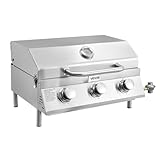
7. VEVOR Tabletop Gas Grill, 3-Burner Stainless Steel Portable Propane Grill, with Built-in Thermometer, Travel Locks, Weatherproof Lid, 22,500 BTU Total, for Outdoor Cooking, Patio, Party, Camping, RV
Overview:
The VEVOR 3-burner tabletop grill delivers serious cooking power in a portable package, targeting group gatherings. With 22,500 BTU output across three burners and a 316 sq. in cooking surface, it handles meals for 5–8 people. Designed for patios, tailgating, or RV trips, it combines commercial-style heat with travel-friendly features like secure lid locks and dual gas compatibility.
What Makes It Stand Out:
Triple-burner precision and 22,500 BTU output stand out in the portable category, enabling simultaneous searing, indirect cooking, and vegetable grilling. The built-in thermometer, weatherproof lid, and dual-fuel capability (propane/natural gas) add versatility unmatched by budget models. Integrated grease management and travel locks enhance safety during transit and use.
Value for Money:
Priced competitively for its capabilities, it offers near-full-size grill performance at a fraction of the cost. The large cooking area eliminates batch cooking, while durable stainless steel construction ensures longevity. Though heavier than single-burner grills, its value shines for frequent entertainers seeking reliability without permanent installation.
Strengths and Weaknesses:
Strengths: High BTU output for even searing; spacious cooking area; precise temperature control; dual-fuel support; robust grease management.
Weaknesses: Heavier (25+ lbs) limits true “ultra-portability”; assembly required; lid lock mechanism can feel flimsy.
Bottom Line:
Ideal for hosts needing crowd-feeding power on the go. Its professional features justify the price for regular group use, though solo campers may prefer lighter options. A top pick for tailgates, RV trips, or small patios demanding serious grilling capacity.
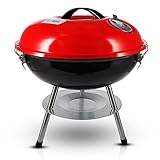
8. Gas One – 14-inch Portable Barbecue Grill with 3-Point Locking Lid for Heat Preservation – Dual Venting System – Small Charcoal Grill for Backyard, Camping, Boat
Overview:
The Gas One 14-inch charcoal grill offers a compact, traditional grilling experience focused on portability and heat control. Unlike gas models, it leverages charcoal for authentic smoky flavor, featuring a 150 sq. in cooking surface, a 3-point locking lid, and dual vents. Designed for camping, boats, or small patios, it emphasizes even heating and mess-free operation through thoughtful engineering.
What Makes It Stand Out:
The 3-point lid locking system is exceptional—it seals heat like an oven for consistent cooking and doubles as a secure transport feature. Dual vents enable precise airflow control, while the integrated ash catcher minimizes cleanup. Its compact size (14-inch diameter) ensures even charcoal distribution, avoiding hotspots common in small grills.
Value for Money:
An affordable entry into charcoal grilling, it outperforms disposable alternatives with durable steel construction and smart features like the ash tray. The lack of fuel costs (vs. propane) enhances long-term value, though charcoal expenses add up. Best for purists seeking portability without sacrificing flavor or control.
Strengths and Weaknesses:
Strengths: Authentic charcoal flavor; superior heat retention via 3-point lid; effortless ash disposal; lightweight yet stable; excellent airflow control.
Weaknesses: Longer preheat time than gas grills; charcoal/fuel management required; smaller capacity than comparable gas models.
Bottom Line:
A stellar choice for charcoal enthusiasts needing a reliable, portable unit. Its heat control and cleanliness features justify the modest premium over basic grills, making it perfect for camping trips or balconies where gas isn’t an option—but gas lovers may miss instant ignition.
Understanding Your RV Grilling Reality
Before diving into specs, it’s crucial to confront the specific demands of cooking on wheels. This isn’t just about portability; it’s about integration with your entire mobile lifestyle.
Assessing Your Rig’s Limitations
Your RV’s size and layout dictate what’s feasible. A compact Class B van has radically different storage constraints compared to a larger fifth wheel. Measure your designated storage spot – under the tongue, in an external compartment, or even inside – accounting for height, width, and depth. Don’t forget weight limits; some storage compartments have surprisingly low capacities. Consider how easily you can access and maneuver the grill in and out, especially if storage is tight or elevated.
Defining Your Cooking Style
Be brutally honest about what you actually cook. Are you a weekend warrior frying up bacon and eggs, or a full-time traveler slow-smoking briskets? Do you primarily cook for two, or host large campground gatherings? Your menu ambitions directly impact the required cooking surface size, heat control precision, and fuel capacity. A solo traveler needs far less real estate than a family of five.
Evaluating Your Typical Campsites
Where do you usually park? National forests with strict fire bans demand different solutions than private RV parks with full hookups. Consider common fuel availability: propane is ubiquitous, but charcoal might be restricted in dry areas, and electric grills are useless without shore power. Wind exposure at your favorite spots also heavily influences grill stability and heat retention needs.
Fuel Type: The Core Decision Point
Your fuel choice impacts everything from setup speed to flavor profile and regulatory compliance. There’s no universal “best,” only what aligns with your specific travel patterns.
Propane Power: Convenience King
Propane grills dominate the RV scene for good reason. They offer instant ignition, precise temperature control with a simple knob turn, and consistent performance regardless of wind (within reason). Refilling small 1lb or 16.4oz disposable cylinders is easy almost anywhere, though investing in a refillable adapter for larger RV tanks is a game-changer for frequent travelers. Cleanup is generally faster, and they produce minimal ash. Consider the regulator compatibility and hose length for safe operation away from your rig.
Charcoal Charm: Authentic Flavor, Extra Effort
Nothing replicates the deep, smoky flavor of charcoal. For many, this is the only way to grill. Portable charcoal grills (kettle-style or compact smokers) are often simpler mechanically and can be very durable. However, they require significantly more time to heat up and cool down, produce ash needing careful disposal (a major consideration in fire-sensitive areas), and struggle more in high winds. Mastering temperature control takes practice, and you’ll need to source and store charcoal bags, adding bulk.
Electric Options: Niche but Useful
Electric grills shine only where you have reliable, consistent shore power – think established RV parks, not boondocking spots. They offer smokeless, clean operation with precise thermostats, making them ideal for quick indoor-outdoor cooking near an outlet or for those with strict fire restrictions. Their major limitation is obvious: no power, no grill. They also typically lack the high-heat searing capability of gas or charcoal.
Hybrid and Alternative Fuels
Some innovative models offer dual-fuel capability (propane/charcoal) or utilize pellet systems for smoker-like results. While intriguing, these often add complexity, weight, and cost. Pellet grills, in particular, require electricity for the auger and controller, making them less universally practical for RVing than dedicated propane units. Evaluate if the added flexibility truly outweighs the potential drawbacks for your trips.
Size, Weight, and True Portability
“Portable” means different things on the road versus the backyard. It’s not just about lifting it; it’s about living with it daily in a confined space.
Cooking Surface Realities
Measure your typical meal. A 150-200 square inch surface often suffices for 2-4 people, allowing burgers, veggies, or fish fillets without constant rotation. Larger surfaces (250+ sq in) cater to families or entertainers but drastically increase the grill’s footprint and weight. Prioritize usable space over total dimensions – awkward shapes or excessive lid height waste storage room.
The Weight Factor Beyond Lifting
Yes, you need to lift it in and out of storage, but also consider how it handles during use. A lightweight grill might tip easily in a breeze on uneven ground. Conversely, a heavier unit provides stability but becomes a chore to move frequently. Aim for the lightest model that still feels substantial and stable when set up on your typical campsite terrain. Remember, every extra pound counts towards your RV’s payload capacity.
Folding Mechanics and Storage Footprint
This is paramount. How compactly does it fold? Does it lock securely for travel? Does it require tools for assembly? Look for intuitive, tool-free folding mechanisms that reliably collapse into a tidy rectangle or cylinder matching your storage space. Avoid models that leave sharp edges exposed or require storing loose parts separately. The difference between a grill that slides neatly under a seat versus one that needs its own dedicated external compartment is huge.
Handle Design and Carrying Comfort
Integrated, heat-resistant handles are non-negotiable. Test (if possible) or read reviews about ergonomics. Can you comfortably carry it one-handed while managing other gear? Are the handles positioned so hot surfaces aren’t near your hands during transport? Padded or insulated grips make a significant difference, especially after cooking when the frame heats up.
Durability and Build Quality for the Road
Your grill will endure constant vibration, temperature swings, dust, moisture, and occasional bumps. Flimsy construction won’t survive a season.
Frame Material Matters
Sturdy steel (often porcelain-enameled or stainless) is the standard for longevity. Avoid overly thin, flimsy metal that dents easily or warps with heat. Stainless steel offers superior corrosion resistance, crucial for coastal travelers or those encountering frequent rain, but often at a higher price point. Check weld points – they should be smooth, continuous, and free of gaps.
Cooking Grate Construction
This is your food’s direct contact point. Heavy-duty cast iron grates provide excellent heat retention and searing but are heavy and require seasoning/maintenance. Porcelain-enameled steel or solid stainless steel grates are lighter, easier to clean, and more common on portables. Ensure they are thick enough to resist warping and have a sufficient coating to prevent rust. Flimsy wire grates bend and break.
Lid and Hinge Integrity
A secure, well-fitting lid is essential for heat control, especially for anything beyond simple searing. Check how the lid closes – does it sit flush? Are the hinges robust and designed to withstand repeated opening/closing and travel vibration? Weak hinges are a common failure point. A lid lock mechanism for transport is a valuable bonus.
Weather and Element Resistance
Consider your typical climate. Does the finish resist chipping and rust? Are control knobs made of heat-resistant, UV-stable material that won’t crack in the sun? Pay attention to how vents or air intakes are designed – they should function reliably but not allow excessive moisture ingress during storage. Look for models known for holding up in real-world travel conditions.
Essential Features for RV Life
Beyond the basics, specific features can elevate your grilling from functional to fantastic on the road.
Wind Resistance Engineering
Open campgrounds are windy. Look for grills with deep, high walls around the cooking chamber, integrated wind guards, or designs where the lid shape itself deflects gusts. Some have adjustable vents positioned to minimize wind interference with the flame. This isn’t just comfort; it’s crucial for maintaining consistent cooking temperatures.
Simplicity of Ignition
Reliable, one-touch ignition is a massive convenience, especially with cold hands early in the morning. Check if the igniter is protected from the elements and if replacement batteries are easily accessible. Avoid overly complex ignition systems that can fail. A reliable manual match-light option as a backup is always wise.
Ease of Cleaning On The Go
Limited water and time demand easy cleanup. Removable, dishwasher-safe (if you have access) parts are ideal, but at minimum, look for smooth surfaces without nooks where grease traps, and grates that lift out easily. Grease management systems (drip trays, channels) that are simple to access and empty prevent nasty flare-ups and make post-cook cleanup faster. Avoid intricate crevices.
Integrated Thermometer
Guessing the temperature leads to ruined meals. A built-in, accurate lid thermometer saves constant lid-lifting (which loses heat) and allows for better control, especially for thicker cuts or indirect cooking methods. Ensure it’s positioned to read the actual cooking zone temperature, not just near the edge.
Versatility Beyond Basic Grilling
Consider if you need more: a dedicated side burner for sauces or coffee? A removable grate for using a cast iron skillet? Compatibility with a smoker box for adding wood flavor? While not essential for everyone, these features can significantly expand your meal options without adding another bulky appliance.
Safety First: Non-Negotiables for Mobile Cooking
Cooking safely in close quarters with flammable materials (your RV!) requires extra vigilance. Never compromise here.
Stable Foundation is Paramount
Your grill must sit on a stable, level, non-flammable surface away from awnings, trees, and your RV’s walls or vents. Many portable grills have foldable legs; ensure they lock securely and provide a wide enough base to prevent tipping, especially on soft or uneven ground. Consider a dedicated, stable stand if the built-in legs feel wobbly.
Propane Safety Protocols
This is critical. Always check connections for leaks (soapy water solution) before first use and periodically. Use an OPD (Overfill Protection Device) certified regulator hose. Store propane cylinders upright and outside the RV, in a well-ventilated compartment never intended for living space. Know how to shut off the gas instantly. Never store a connected cylinder inside the RV. Familiarize yourself with park regulations regarding propane use and storage.
Frequently Asked Questions
Frequently Asked Questions
Can I use my portable propane grill inside my RV’s garage or storage compartment? Absolutely not. Propane grills must only be used outdoors in well-ventilated areas, far from any enclosed space, including RV storage compartments, due to the extreme risk of carbon monoxide poisoning and fire.
How do I prevent my portable grill from blowing over in the wind? Choose a grill with a low center of gravity and wide, stable legs. Place it in a naturally sheltered spot if possible (behind your RV, near a rock), use heavy-duty grill mats for stability on soft ground, and avoid setting it up on steep inclines. Some models have specific wind-resistant designs.
What’s the safest way to store propane tanks while traveling? Store propane cylinders upright and secured in an external, well-ventilated RV compartment specifically designed for propane (usually with a drain and vent to the outside). Never store them inside the living area, in the passenger compartment, or in an unventilated storage space.
How often should I clean my portable grill while on the road? Clean the cooking grates thoroughly after each use while they’re still warm (but not scorching hot) to burn off residue. Perform a deeper clean of the interior, grease tray, and exterior whenever buildup is noticeable, which could be weekly or after several uses depending on what you cook.
Can I use a charcoal grill in national forests or state parks? Fire restrictions vary significantly by location and time of year, especially during dry seasons. Always check the specific regulations for the area you are visiting before you go. Many areas prohibit open flames, including charcoal grills, during high fire danger periods.
What’s the most space-efficient way to store a portable grill in a small RV? Measure your available space precisely. Look for grills that fold into a compact, rectangular shape that slides neatly under a seat, fits within an external compartment’s dimensions, or can be mounted vertically. Avoid models with protruding handles or irregular shapes that waste space.
How do I handle grease disposal responsibly while camping? Never pour grease on the ground. Use a dedicated, heat-resistant container (like an old metal can) to collect grease while cooking. Once cooled and solidified, dispose of it in a trash bin at a dump station or campground facility. Many parks have specific grease disposal guidelines.
Is it safe to leave a propane tank connected to the grill during travel? No. Always disconnect the propane tank from the grill before traveling. Store the tank properly in its designated external compartment, and ensure all connections on both the tank and grill are capped to prevent leaks and debris ingress.
Can I use my portable electric grill if I’m boondocking (no shore power)? Only if you have sufficient inverter capacity and battery bank to power it. Most portable electric grills draw significant wattage (1000W+), which can deplete house batteries very quickly. They are generally impractical for extended boondocking without a generator or large solar setup.
How do I know if my portable grill is compatible with my RV’s larger propane system? You’ll need a low-pressure hose with the correct fittings: typically a POL (Type 1) connection for the RV tank and a QCC1 (Type 1) connection for the grill. An adapter hose specifically designed for this purpose is essential; do not use makeshift connections. Ensure the regulator is appropriate for the grill’s requirements.
See Also
- The 10 Best Portable Charcoal Grills Every Tailgater Needs This Year
- 10 Essential Portable Grills Every First-Time Buyer Needs This Year
- The 10 Best Gas Grills Every Apartment Renter Needs This Year
- Stop Struggling with Heavy Equipment with the 10 Best Lightweight Portable Grills This Year
- 10 Essential Gas Grills Every First-Time Buyer Needs This Year